
Technologies · Composite
Béton Ciré
French “waxed concrete” — a warm, hand-finished surface with the soft depth of poured stone and the glow of a waxed, lived-in patina.
What it is
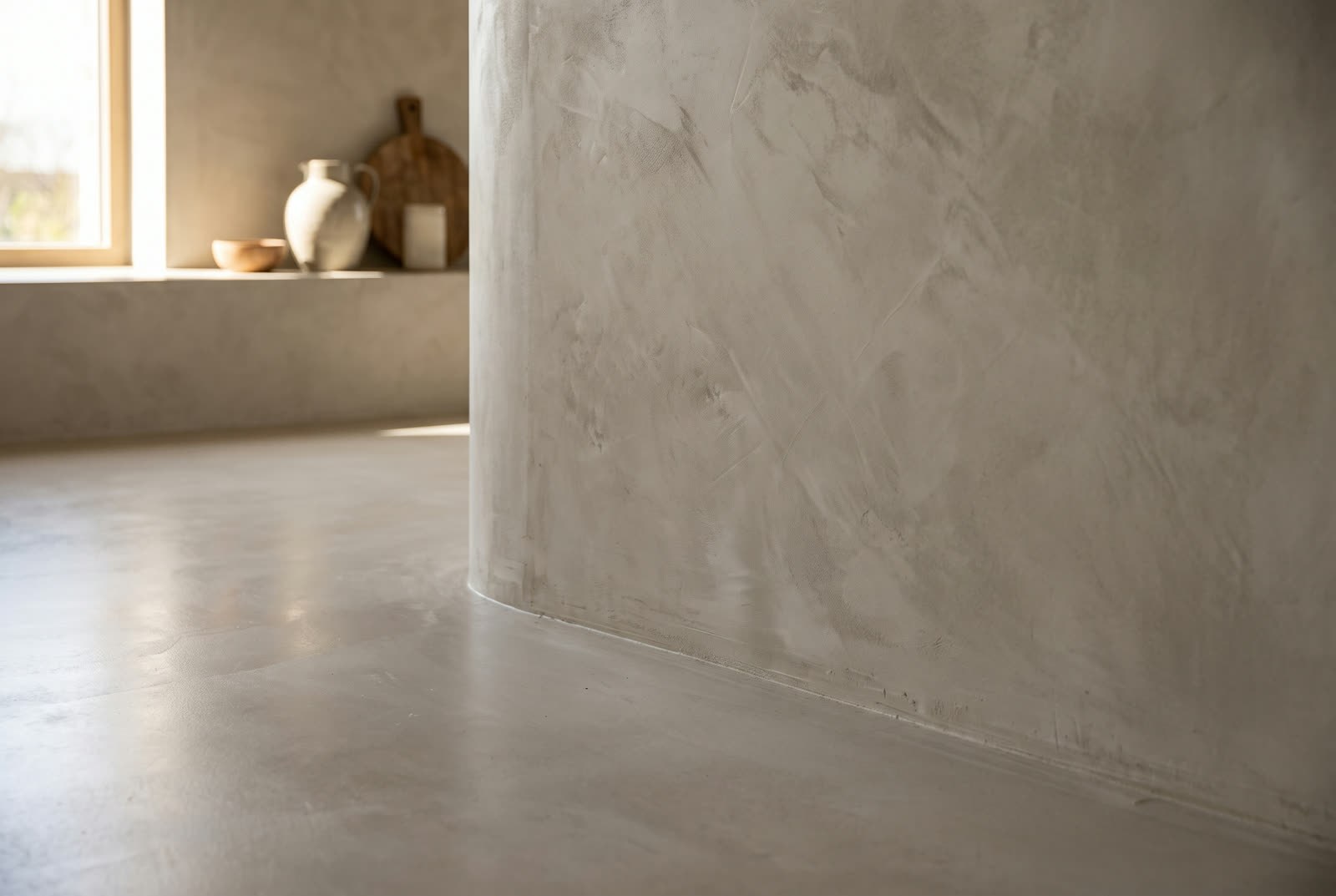
Béton ciré is French for “waxed concrete” — a fine mineral coating trowelled on by hand, then worked to a soft, waxed glow. It has the quiet depth of poured stone, but warmer and more intimate, with a gentle cloud-like movement that shifts as the light moves across it. Like its close cousin microcement, it runs seamlessly from floor to wall with no grout lines and no joins.
Where microcement leans cool and contemporary, béton ciré is the softer, more hand-made of the two. The wax finish gives it a low, honeyed sheen and a patina that only grows lovelier with the years — a surface that feels warm underfoot and asks to be touched.
What is béton ciré in English?
In English, béton ciré is “waxed concrete”: béton is French for concrete and ciré means waxed. In the UAE the same thin, seamless, hand-trowelled cement finish is usually sold as microcement (also micro cement or microtopping). The difference is the protection on top: traditional béton ciré is finished with wax, while microcement is sealed under a polyurethane topcoat, which is what makes it washable and, with a membrane beneath, fit for showers. The full side-by-side is in béton ciré in English: waxed concrete vs microcement.
Where it comes from
Béton ciré grew out of the French love affair with raw concrete, softened for the home. Artisans took the honest beauty of the material, made it thin and liveable, and finished it with wax the way old floors and furniture have always been cared for. It is a craft measured in feel and timing — exactly the kind of hand-work RBS brings to the region’s most considered interiors.
Start a project
Considering Béton Ciré for your space?
Tell us about your project on WhatsApp and we'll take it from there.