
Technologies · Mineral
Clay Plaster
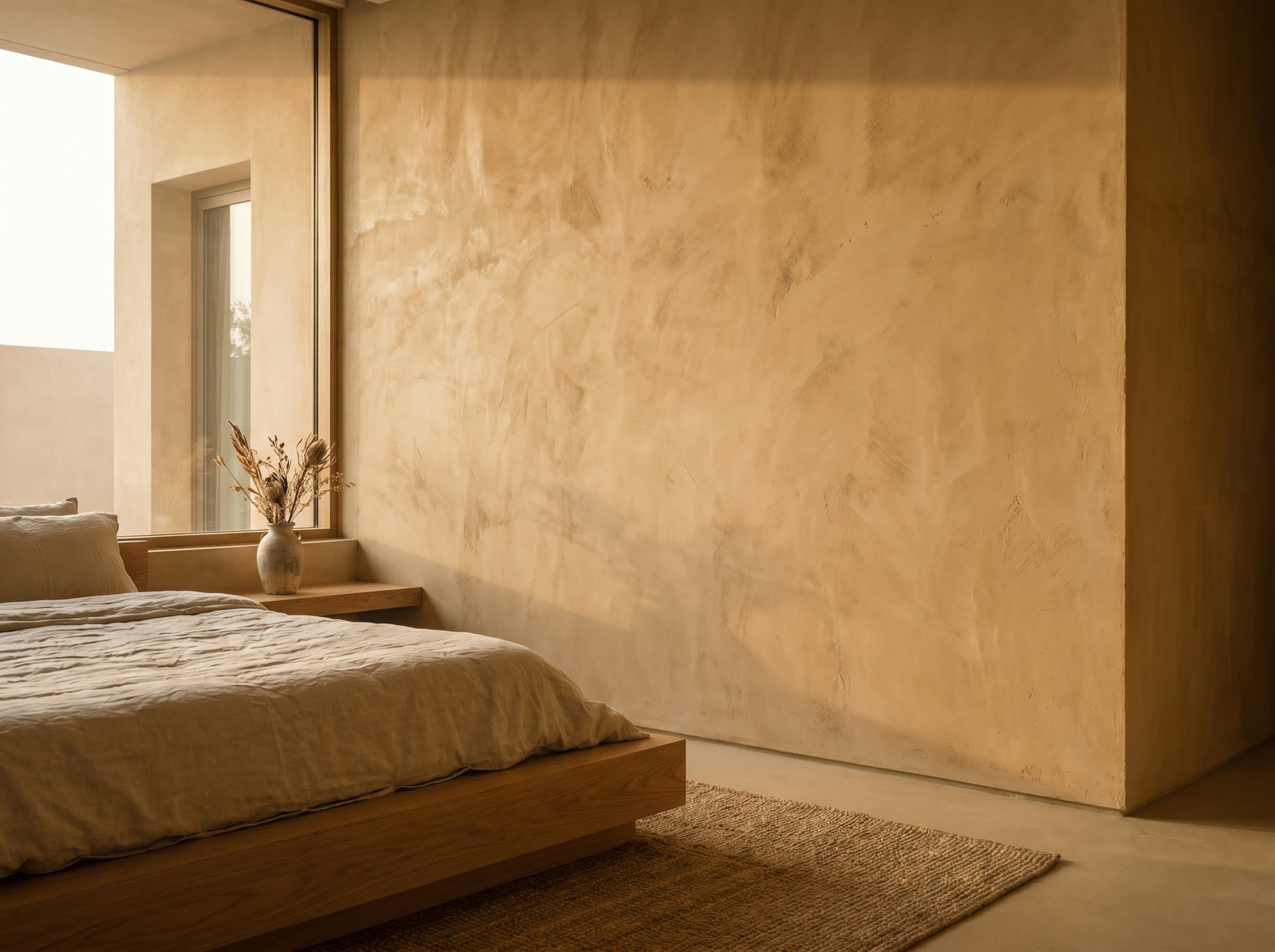
A raw earthen finish of clay, fine sand and natural pigment — deeply matte, velvety and grounding, in the tones of sand and ochre. It softens the light and quietly steadies the air of a room.
What it is
Clay plaster is about as honest as a wall can be: earth, fine sand and natural pigment, pressed on by hand and left to settle into itself. The finish is deeply, almost powdery matte — the kind of surface that swallows light instead of bouncing it back. It feels soft and slightly warm underhand, closer to fine suede than stone. The colour comes from the earth itself, so the tones are the ones nature reaches for first: sand, ochre, dusty clay, quiet taupe.
It belongs in the rooms where you want to slow down. A bedroom wall that seems to hush the space around it. A reading corner that feels held. Because the pigment sits all the way through the material, the colour has a depth you can almost sink into, shifting gently as the light moves across the day. And it does more than look calm — clay is naturally breathable, drawing in and releasing moisture, so it steadies the air without you ever noticing it working.
Where it comes from
This is the oldest wall finish there is. Long before lime, before paint, before anything we would call a product, people took the ground beneath their feet, mixed it with water and pressed it onto their walls. Every ancient culture arrived at the same simple idea, from the mud-brick houses of the first cities to the earthen rooms that kept their people cool in the heat and warm in the cold.
What has changed is the refinement, not the substance. The clays are chosen and cleaned, the sands graded finer, the pigments drawn from natural earths — so the ancient warmth arrives smooth, even and ready for a contemporary home. It is one of the few luxuries that asks for almost nothing and gives back a room that simply feels good to be in.
Start a project
Considering Clay Plaster for your space?
Tell us about your project on WhatsApp and we'll take it from there.