
Technologies · Mineral
Silicate Mineral Plaster
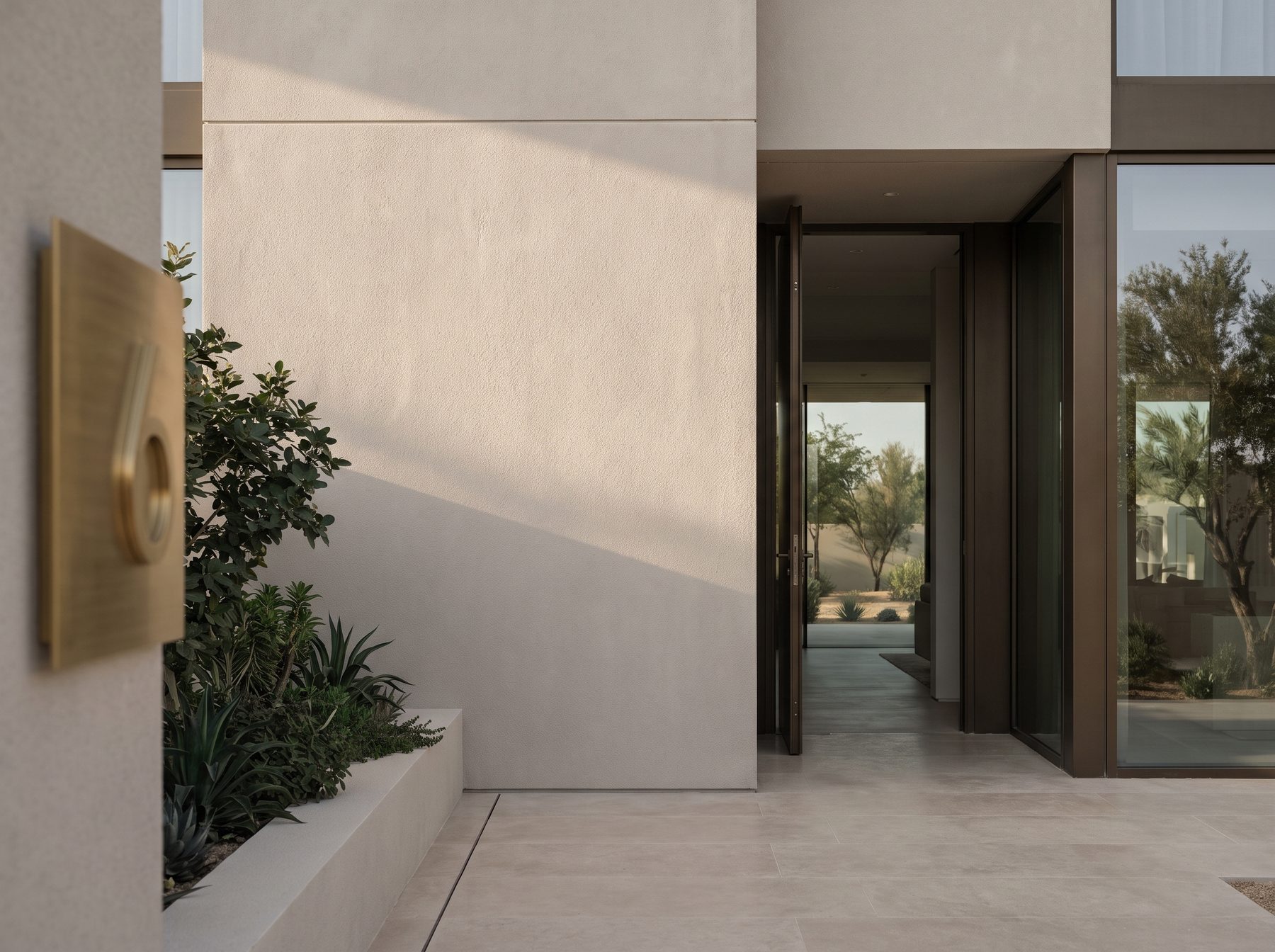
A fine mineral render bound with silicate — the plaster sibling of waterglass paint. Trowelled grain that bonds into the wall like glass: matte, breathable, and built to keep its colour and its grip for decades outdoors.
What it is
Silicate mineral plaster is the plaster sibling of our Silicate Mineral Paint — the same waterglass chemistry, given body. Fine quartz and marble sands are carried in a sol-silicate binder (colloidal silica with potassium waterglass), trowelled on as a thin render, and left with a fine, even mineral grain. As it cures it does what all silicates do: it bonds chemically into the mineral wall beneath, effectively growing a layer of pigmented, sand-filled glass on the elevation. Not a coating that grips the wall — a mineral that has become part of it.
The nearest neighbour in our range is Intonachino, the fine lime render, and the difference between them is the chemistry of how each turns to stone. Lime carbonates — it slowly reabsorbs carbon dioxide and hardens back toward limestone, soft-edged, gaining patina, mellowing with age. Silicate silicifies — it bonds like glass, fast and hard, and then simply stays put. Both breathe, which matters enormously on a rendered wall in coastal humidity; both are honestly mineral in colour and texture. But where intonachino is the poetic, patinating skin of a Tuscan villa, silicate plaster is the working exterior: harder, more scrubbable, and holding its exact colour under sun that would slowly lift and chalk an organic finish. On a sheltered courtyard we will often argue for the lime; on a south-facing elevation, a compound wall or a ground floor that gets brushed and washed, the silicate earns its place.
The same honest boundary applies as with the paint: it needs a mineral substrate to marry. And its beauty is a matte, granular one — a wall that wants polish belongs with the burnished lime finishes, not here.
Where it comes from
The silicate render grew directly out of the silicate-paint tradition of nineteenth-century central Europe. Once waterglass had proved that a painted mineral surface could last for generations, the step to giving that chemistry a body of sand was obvious, and mineral renders bound with silicate became a staple of German-speaking Europe’s facades — schools, housing blocks, civic buildings that are still wearing their original skin. The modern sol-silicate generation refined the binder with colloidal silica, making it more tolerant in application while keeping the bond that defines the family.
In the UAE we treat it as the facade texture for owners who think in decades. Render is already the default skin of this country’s villas and compounds; the question is only what that render’s final coat should be. A breathable mineral grain that bonds like glass and never asks the sun for mercy is, for many elevations, the honest answer — and where it is not, we will point you to the finish that is.
Start a project
Considering Silicate Mineral Plaster for your space?
Tell us about your project on WhatsApp and we'll take it from there.