
Technologies · Composite
Bush-Hammered Concrete
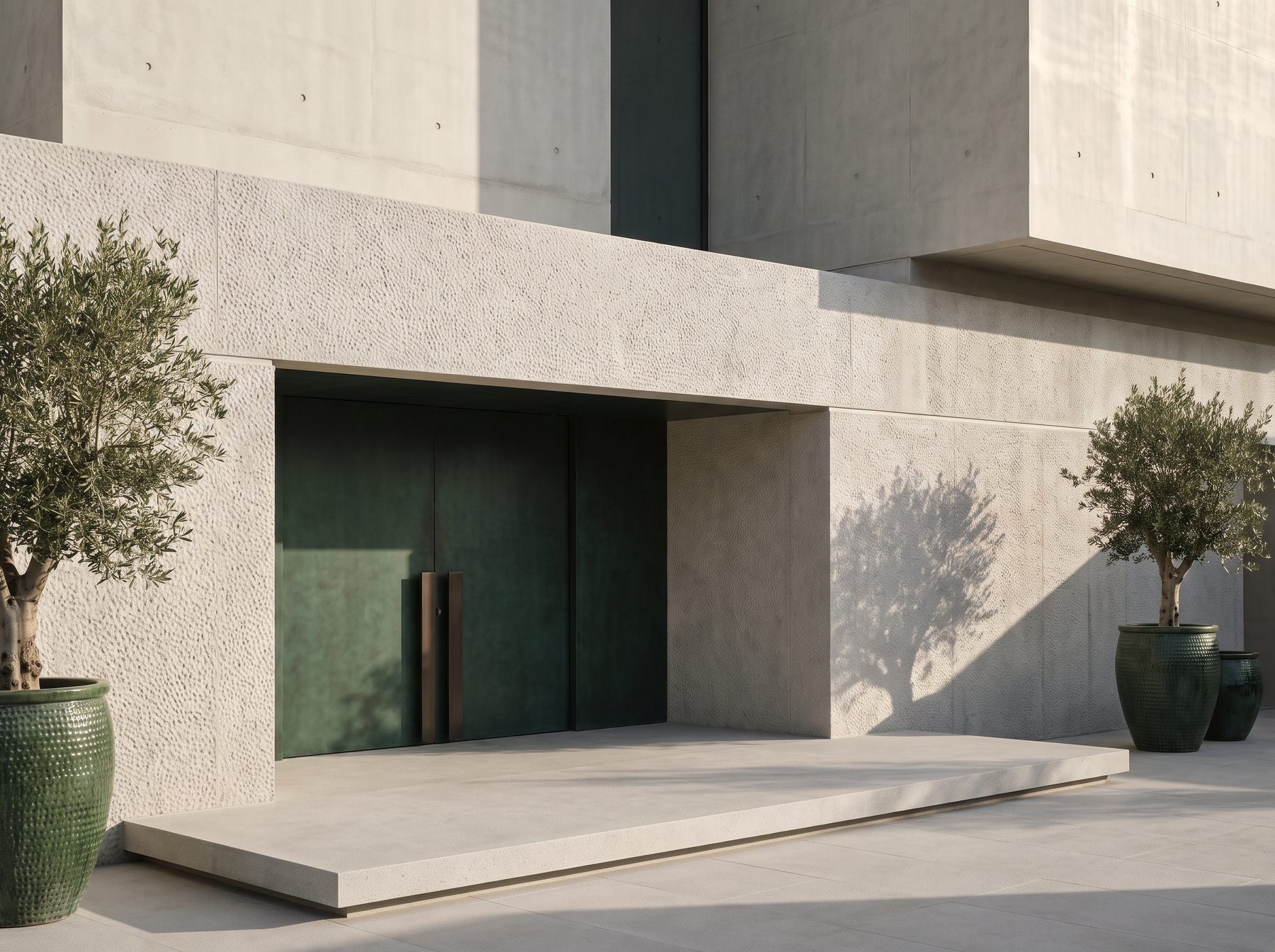
Concrete textured the stonemason's way — bush-hammered, sandblasted or shot-blasted after curing, so the surface breaks open into the matte, dressed-stone character of worked rock.
What it is
Bush-hammered concrete is cured concrete worked the way masons have always worked stone. Once the material is hard, its smooth cast skin is struck or abraded off — and what emerges is not a coating or a render but the body of the concrete itself, fractured open into a matte, granular, dressed-stone texture with real shadow in it.
The family covers a spread of intensities. Honing is the gentlest — a light grind that takes the shine off and leaves a smooth, satin, stone-like matte. Sandblasting erodes the skin into a fine, even, slightly sugary texture. Shot-blasting goes coarser, peening the surface open with steel shot. And the bush hammer itself — a head of pointed teeth, the mason’s bocciarda — strikes the deepest relief, shattering the surface into the rough, honest character of hand-dressed rock.
It is the exact mirror of our Polished Concrete, and the two are best understood together: same slab, opposite direction. Polishing closes the surface — grinding it ever finer and tighter until it holds light like still water. Texturing breaks the surface open, so it scatters light instead. One is for the calm interior floor; the other is for the facade, the plinth, the water feature and the external step, where shadow, grip and weather matter more than shine. When a client asks us for “stone-look concrete”, the first question is simply which of the two directions the surface deserves.
Where it earns its keep outdoors is grip. A honed or blasted step stays sure underfoot when wet, because the slip resistance is the fractured texture of the material itself — nothing applied, nothing to wear away. That makes it a natural choice around fountains and water features, and on the external stairs and ramps that coatings struggle to hold onto.
Where it comes from
The tools are older than concrete. Bush hammers, points and chisels are stone-dressing instruments, and masons used them for centuries to give quarried blocks a worked face. When concrete became architecture’s material, the same tools followed it: twentieth-century architects had cast walls hammered back to expose their body, turning grey cast surfaces into something closer to hewn rock. The technique has stayed in the architectural vocabulary ever since, joined by the industrial cousins — sandblasting and shot-blasting — that deliver its texture at speed and at scale.
In the UAE it suits the light. Strong, low, raking sun is unforgiving to flat surfaces and generous to textured ones — a blasted or hammered face changes character from morning to evening, which is more life than paint will ever give a wall. As a surface company, our part is the finishing craft — selecting the register of texture, working it evenly, and sealing it against dust and weather — on concrete elements built within a wider project.
Start a project
Considering Bush-Hammered Concrete for your space?
Tell us about your project on WhatsApp and we'll take it from there.