
Technologies · Polymer
Glass Aggregate Resin
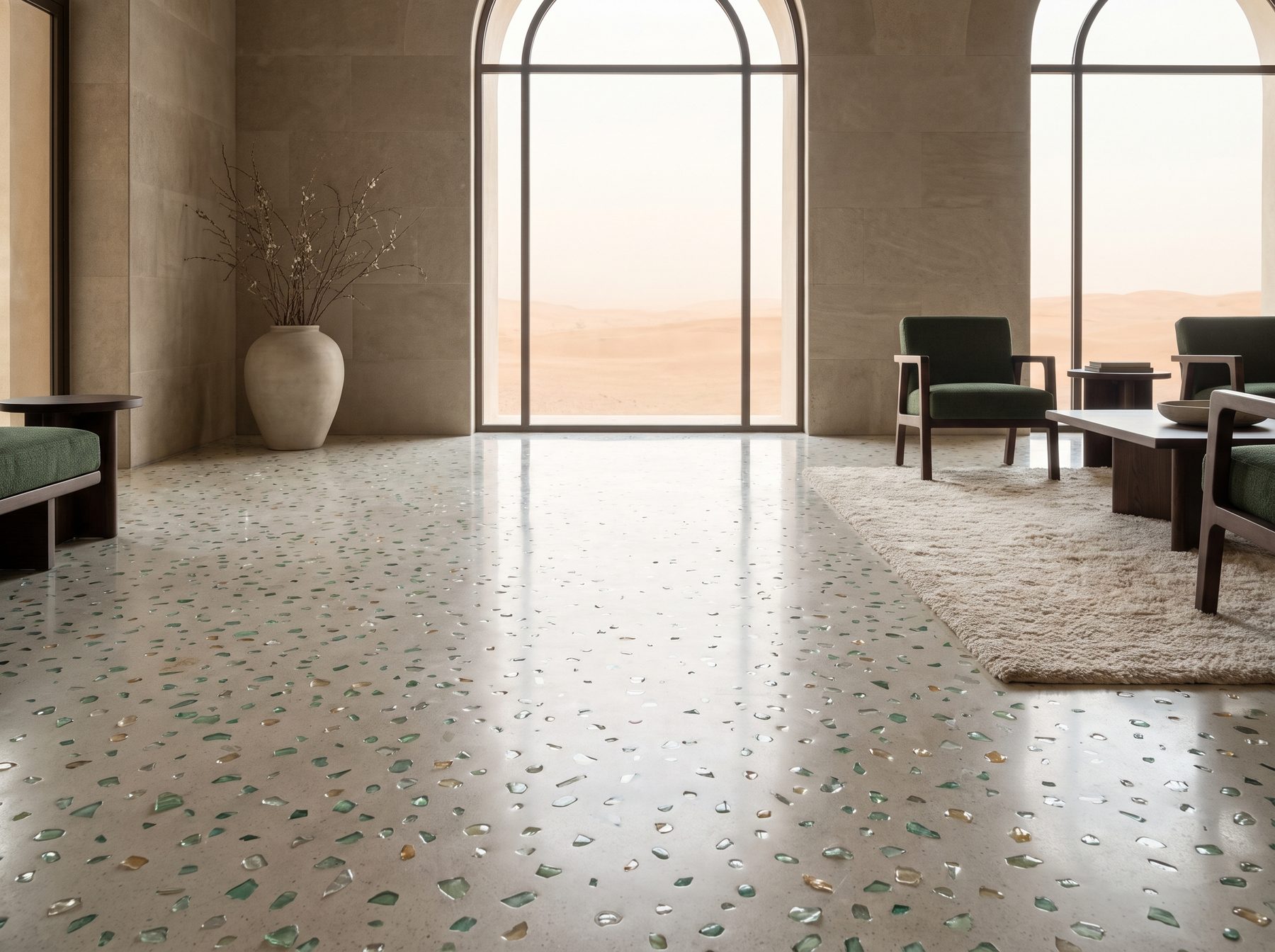
Recycled glass chips bound in clear resin — the sustainable sister of the stone carpet, laid seamless with a subtle glint that natural aggregate cannot give.
What it is
Glass aggregate resin is our resin-bound craft with a different material in the bucket. Instead of natural gravel, the aggregate is recycled glass — bottles and flat glass, crushed, then tumbled until every edge is rounded smooth — coated in clear resin and hand-trowelled into one seamless surface. The method is identical to the stone carpet; the character is not. Stone absorbs light and sits quietly. Glass returns it. Walk past a glass aggregate floor and small points of light move with you — a subtle glint, never glitter — and the colour range escapes the quarry altogether: sea greens, cobalt blues, ambers, clear crystal tones, used alone or folded through natural stone as an accent.
It should not be confused with its polished cousin. In epoxy terrazzo, glass chips are locked in pigmented resin and then ground and polished flat, so the glass appears as flecks inside a glass-smooth plane. Here the tumbled glass keeps its rounded form and gentle texture, the way pebbles do in a stone carpet — and laid outdoors on the right build-up it stays permeable, which no polished floor can be. Choose the terrazzo when you want a mirror; choose this when you want the garden path to shine.
We are honest about where it earns its keep. Processed recycled glass costs more than gravel, so most projects spend it where it is seen — a pool surround, a spa floor, a border or motif running through a larger stone field — rather than across a plain expanse. And in the Gulf sun it must go down in UV-stable aliphatic resin, the same discipline as all our exterior resin work, because clear glass would expose an ambering binder without mercy.
Where it comes from
Glass has been slipped into floors for as long as makers have had offcuts — Venetian terrazzo workers used it centuries ago — but glass as the whole aggregate is a child of the recycling movement. From the 1990s, processors learned to crush and tumble waste glass into a safe, consistent aggregate, and resin-bound installers realised it trowelled exactly like stone while doing something stone could not: carrying colour and light. The idea matters here. The UAE is serious about circular-economy targets, and a floor whose material is diverted waste — laid by the same in-house crews as the surface RBS was built on — lets a project claim sustainability it can actually point at, and enjoy looking at, every day.
Start a project
Considering Glass Aggregate Resin for your space?
Tell us about your project on WhatsApp and we'll take it from there.