
Technologies · Polymer
Resin-Bonded
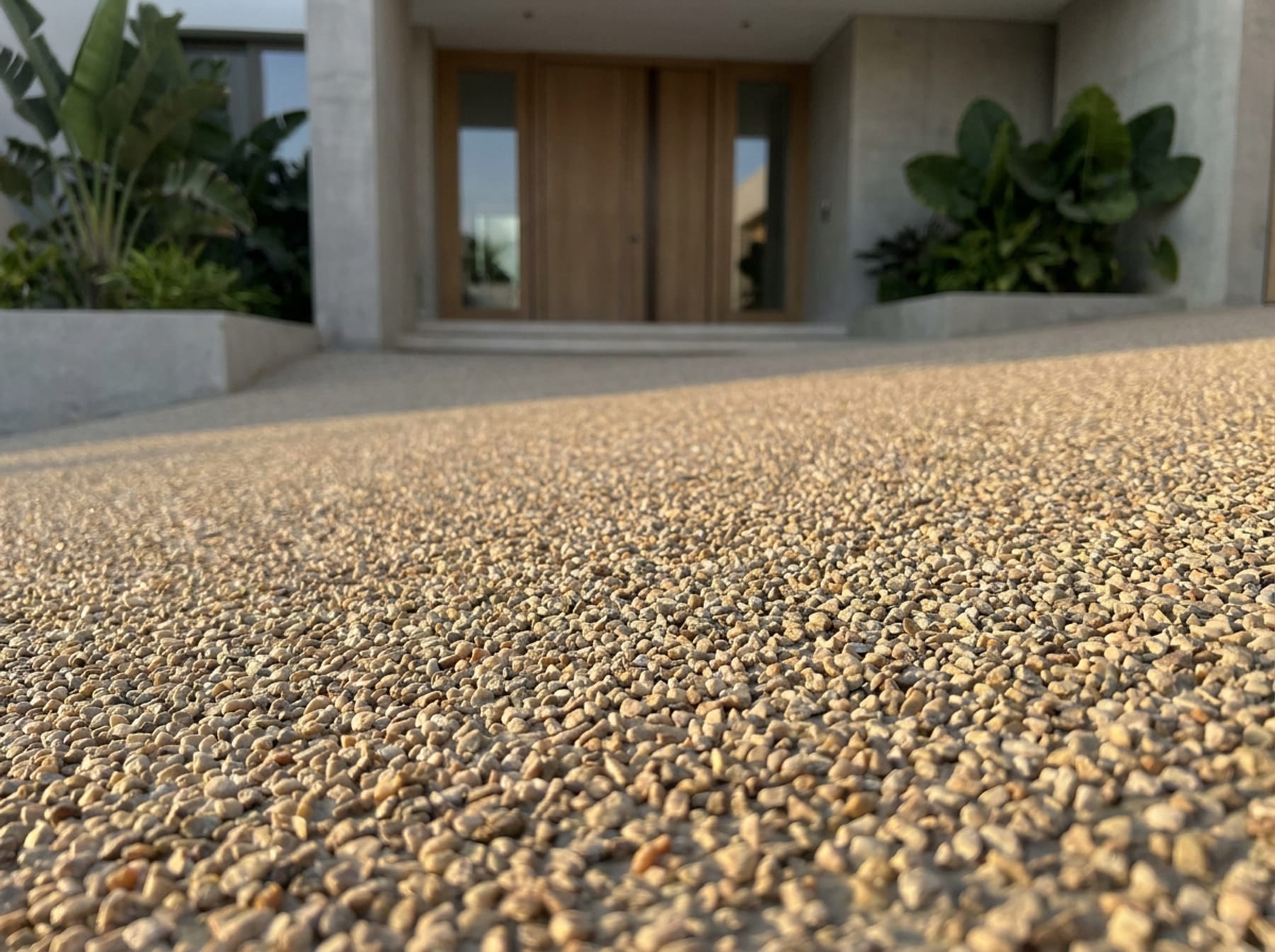
The textured sister of resin-bound — dry stone scattered over a resin-coated base, so every stone tip stands proud. Rough, sealed, and naturally anti-slip.
What it is
Resin-bonded is resin-bound’s rougher, grippier sibling — same natural stone, same resin, opposite method. Instead of mixing stone and resin together and trowelling them smooth, the resin goes down first as a continuous film over a solid base, and dry aggregate is scattered — broadcast — generously over the wet surface. Each stone bonds where it lands; once cured, the loose excess is swept away. What remains is a surface of stone tips standing proud: textured, sealed, and naturally anti-slip.
That method flips its character. Resin-bound is smooth and permeable — water drains through. Resin-bonded is textured and sealed — water runs off. Which is exactly why it earns its place: on ramps, slopes, steps and pool surrounds, grip is worth more than anything, and no seamless surface grips like scattered stone.
Where it comes from
Broadcasting stone over wet resin is the older and simpler of the two resin-aggregate methods, and it has stayed in use wherever slip resistance is the first requirement. For us it is the natural companion to the surface RBS was built on: identical materials, identical craft, applied the other way around. In the Gulf we lay it with UV-stable aliphatic resins — the same discipline as our resin-bound — so the finish holds its colour under the harshest sun, with the stone doing what it has always done underfoot: holding on.
Resin bonded vs resin bound: what it is, and where it fits
Resin bonded is the scatter method: a resin film is spread over a solid base and dry stone is broadcast onto it, so the finished surface is sealed, textured and grippy. Resin bound is the trowelled method: stone and resin are mixed together and laid as one permeable, smooth layer. Same stone, same UV-stable resin, opposite results. Bonded fits where grip comes first and the ground already sheds water — ramps, sloped driveways, steps, wet pool edges — and where a thin, fast overlay on existing concrete is wanted. Bound fits flat driveways, courtyards, paths and pool decks where a seamless, draining, barefoot-smooth surface matters more. We apply both and will say which your site needs; the full comparison is in resin bound vs resin bonded, and prices are in the resin bound cost guide (bonded is priced per project after a site visit). For the smooth, permeable version, see resin bound gravel in Dubai and stone carpet in Abu Dhabi.
Resin bonded vs resin bound driveway: which one for a UAE villa?
For a flat villa driveway, resin bound is usually the better choice; for a steep driveway or ramp, resin bonded is. A resin bound driveway is smooth, seamless and permeable, so rain drains straight through and there are no loose stones to sweep. A resin bonded driveway is rough, grippy and sealed: tyres and wet feet hold better on a slope, it goes straight over sound concrete or asphalt, but a flat drive needs proper falls so water runs off, and under heavy turning traffic some surface stone can shed over the years. Many villas end up with both: bound on the flat drive and paths, bonded on the ramp down to a basement. Resin bound starts from AED 170 per square metre plus a one-off AED 3,500 mobilization fee per project; resin bonded is priced per project after a site visit. Send a photo of the drive and its slope on WhatsApp and we will say which method fits.
Start a project
Considering Resin-Bonded for your space?
Tell us about your project on WhatsApp and we'll take it from there.