
Technologies · Polymer
PU Floor Coating
A thin-film polyurethane coating for floors — protection and sheen control over concrete and resin, and the standard UV-stable clear coat over epoxy colour.
What it is
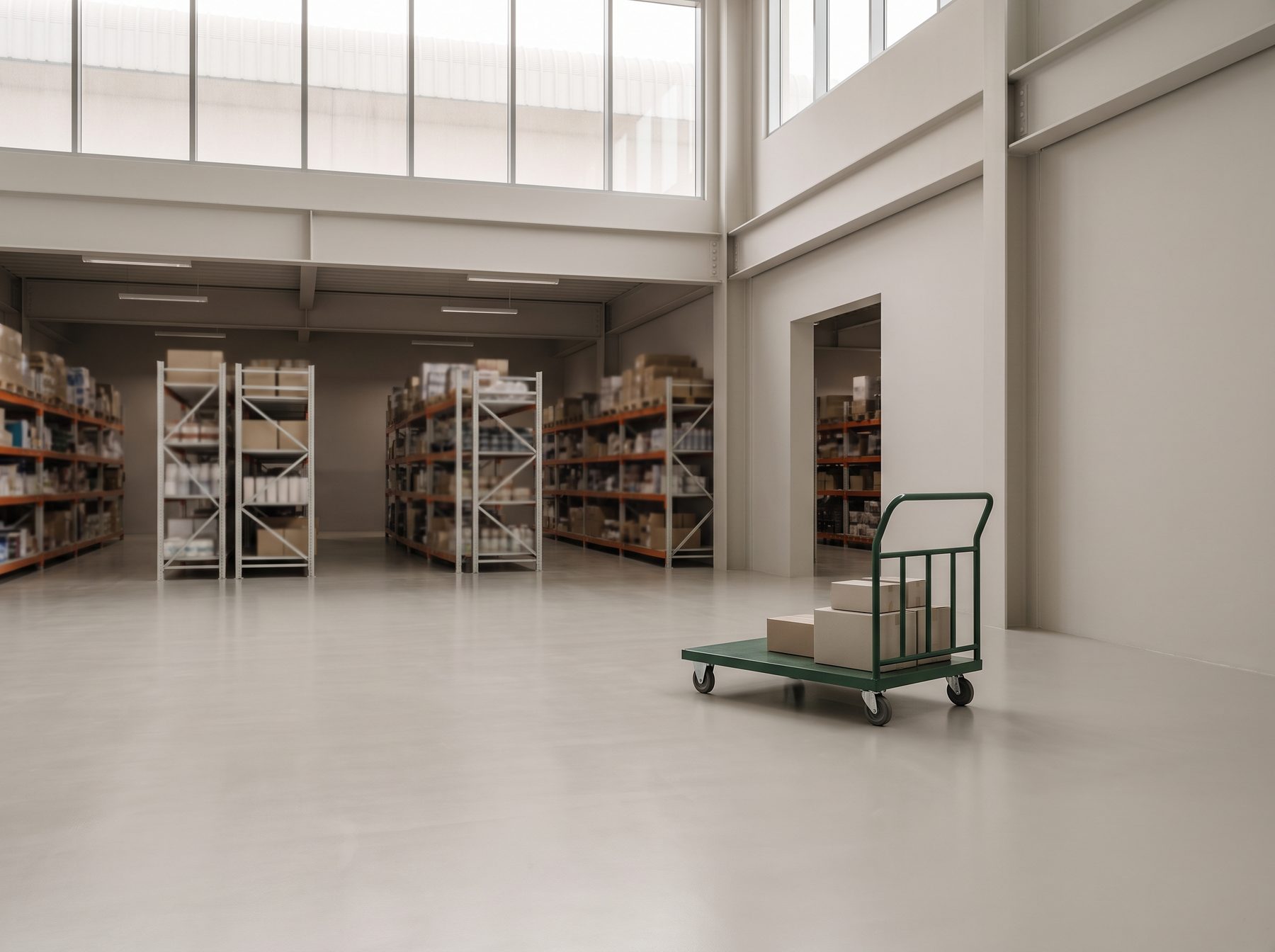
A PU floor coating is the thin film that finishes other floors — a polyurethane rolled on at a fraction of a millimetre to protect a surface and set its sheen. It is the quiet workhorse of the resin trade, and it does three jobs. Over concrete, it seals a porous slab into a dust-free, cleanable working floor. Over resin bodies, it is the sacrificial wear layer that takes the scratches so the colour beneath does not. And over epoxy in particular it is the standard answer to that material’s one honest weakness: epoxy ambers in sunlight, and an aliphatic — UV-stable — PU clear coat over an epoxy colour coat keeps the floor’s tone true for years. The same film is also how sheen becomes a design decision: the identical floor can leave the job glossy, satin or fashionably matte depending on the topcoat chosen.
Two comparisons place it in our range. Its faster-curing cousin is polyaspartic — chemically a near relative, equally colour-fast, curing in hours instead of overnight and priced accordingly; when the programme is brutal, that is the one we reach for. And over bare concrete there is a fork in philosophy: a PU-sealed slab wears its protection as a renewable coat on top, while polished concrete densifies and grinds the slab until the stone itself is the finish, with nothing to peel or recoat — a coating versus a surface made stone-hard in its own right. Sealing is faster and cheaper; polishing is more permanent. We will tell you plainly which your slab and your traffic deserve, because a thin film protects but never rebuilds — it will not flatten a rough floor or bridge a crack, and where the base is tired the honest quote starts with repair or a body coat, not with paint over trouble.
Where it comes from
Polyurethane coatings came out of mid-century industrial chemistry — varnishes tough and elastic enough for factory floors, ship decks and sports halls — and the aliphatic grades that followed solved the yellowing that dogged both early PU and every epoxy since. That is the version the sun selects for here. In the UAE, glass curtain walls pour daylight across interior floors, and an unprotected epoxy shows it within a couple of summers; the aliphatic topcoat is how a resin floor is specified for this climate rather than merely installed in it. Our in-house crews finish most of our resin work with one, choose the sheen with the owner at the sample stage, and put a renewal cycle in writing — because a coating honestly maintained outlasts a miracle finish every time.
Start a project
Considering PU Floor Coating for your space?
Tell us about your project on WhatsApp and we'll take it from there.