
Technologies · Composite
Integral Coloured Concrete
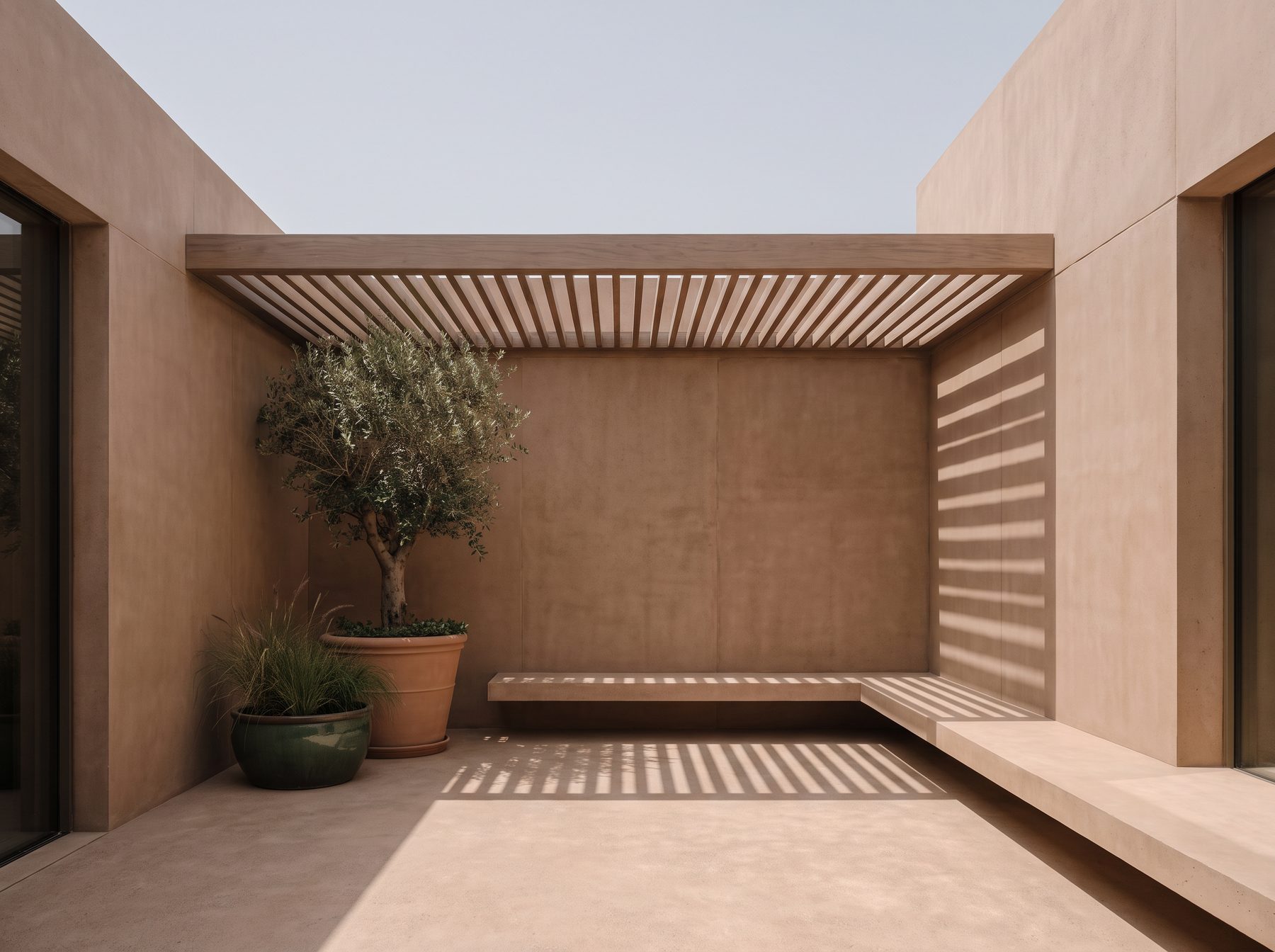
Concrete coloured in the mix, not on the surface — mineral pigment blended through the whole batch, so the tone is identical at the surface and the core and can never wear off.
What it is
Integral coloured concrete is concrete with the colour built in at the batching plant. Mineral pigments — mostly iron oxides, the same family that colours the desert itself — are blended through the wet mix, so every kilogram of the material carries the tone. Cut it, chip it, grind it, wear it down for a generation: the colour underneath is the colour on top, because there is no “underneath”. That is the whole idea, and it is what separates it from every painted, coated or surface-treated alternative.
It sits at one pole of a clean philosophical divide. Colour through the mix — this page — is even, calm and permanent: one tone, everywhere, forever. Colour reacted into the surface is the other pole: Acid-Stained Concrete works chemically on the top of a cured slab, producing mottled, variegated, antique tones that live only in the surface zone. One gives you a material; the other gives you a patina. Deep, uniform, structural colour wants integral pigment; drama and variegation want the stain — and the two philosophies do not substitute for each other.
The other natural partner is Polished Concrete. A polished floor is the slab itself refined, so if the slab is through-coloured, the polish reveals colour with real depth — warm material ground to a glow, not grey concrete under a tinted seal. This is a decision that pays best when it is made early: as with all things integral, it exists only if it was in the mix.
Honesty about the trade-offs matters here more than usual, because the choice is irreversible. The colour is fixed the day the concrete is poured — there is no repainting later, which is why we insist on cured, sealed samples before anyone signs off a tone. Batch-to-batch variation is real: adjacent pours can read slightly different, and that mineral drift is part of the material’s honesty. And efflorescence — lime salts blooming to the surface — can chalk and soften the tone in the early months, particularly outdoors, before it weathers back.
Where it comes from
Pigmenting mortar is ancient, but coloured concrete as a dependable material dates from the synthetic iron-oxide industry of the twentieth century, when pigments became consistent, alkali-proof and UV-stable enough to trust inside a structural mix. Architects took to it because it let concrete be the finished surface — coloured as material, not decorated afterwards.
In the UAE it is a natural fit: an oxide palette of sands, ochres and greys that belongs to this landscape, and colourfastness under a sun that destroys lesser colour. RBS does not pour structural concrete — our part is the decorative side: pigment selection, sampling, and the finishing and sealing that decide how the colour finally reads.
Start a project
Considering Integral Coloured Concrete for your space?
Tell us about your project on WhatsApp and we'll take it from there.