
Technologies · Specialty
Texture Paints
Decorative paints carrying a mineral tooth — sand, chalk, clay and limewash effects that give a wall real texture and depth in a couple of coats, without laying a plaster.
What it is
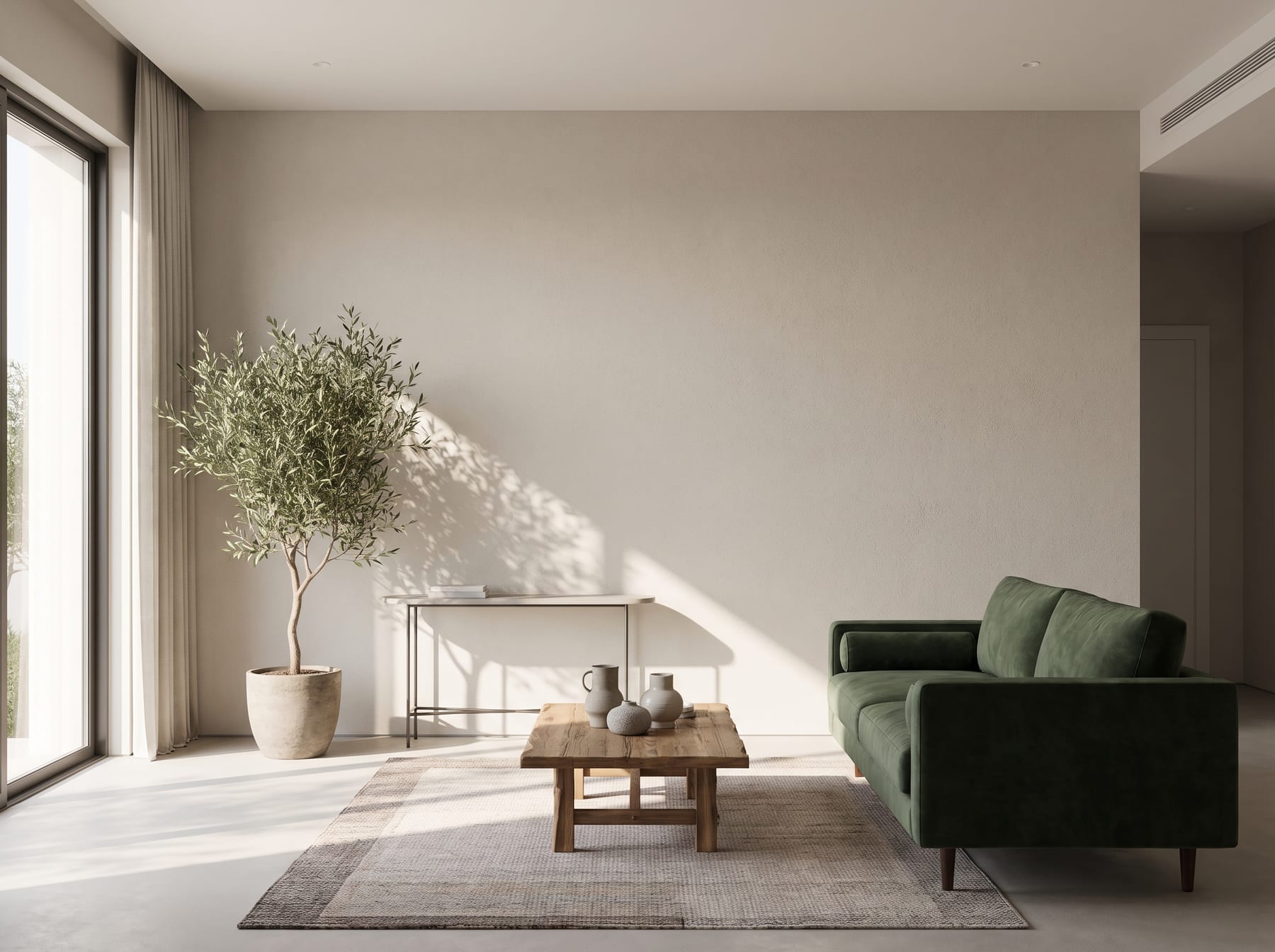
Texture paints are decorative coatings with a mineral tooth built into them. Fine sand, chalk or mineral fillers are carried in the binder, so what goes on with a brush or a roller lands as a surface with grain rather than a flat film. In two coats a plain wall stops being plain: light catches the tooth, a shadow gathers where the texture sits deepest, and the colour drifts gently across the wall instead of sitting dead-even the way emulsion does.
The family covers a spread of effects. A sand texture gives the finest, most even grain. Chalk finishes are softer and more powdery to the eye. Clay- and limewash-effect paints chase the cloudy, breathing movement of the real mineral finishes — laid on and then broken up with a brush so the tone drifts and pools. All of them do the same essential job: real texture, quickly, over almost any sound wall.
We should be straight about what this family is and is not, because the distinction is the whole point of choosing well. Texture paints imitate the minerals; they don’t replace them. Our Clay Plaster, Intonachino and the lime family are the materials themselves — laid several millimetres thick, worked by hand, with a depth and translucency you can read from across a room. Our limewash-effect paint, in particular, mimics the cloudy movement of real Limewash — but where limewash is slaked lime, breathing and mineral, this is an acrylic film engineered to look like it. That effect paint gets you a convincing share of the look for a fraction of the time and cost, and on a ceiling, a back wall or a fast-turnaround fit-out that is exactly the right trade. On the wall a room is built around, it isn’t: stand close to a real lime finish and a painted impression of one, and you will see which is which. We will tell you which one your wall deserves.
It is also a different animal from our Velvet & Suede Effects, which people sometimes group in here. Those are built to move light — a fine directional nap that shifts tone as you cross the room. Texture paints are built to hold light: a static, granular tooth that stays the same from every angle. One changes as you walk past it; the other simply has grain.
Where it comes from
Adding grit to paint is one of the oldest tricks on a wall. Sand has been thrown into limewash for as long as people have wanted a surface to look like the earth it stands on, and the reason has usually been practical rather than poetic: texture hides a multitude of sins in a wall that was never flat to begin with. What changed in the twentieth century was the binder. Once acrylics and modern resins could hold a heavy mineral load without cracking or dusting off, the effect stopped being a compromise and became a range — sand, chalk, clay, limewash, stone — each engineered to land predictably from a brush rather than depending on the hand that laid it.
That is the honest appeal of it, and why it earns a place in our range alongside the plasters. Not every wall in a villa wants to be a hand-trowelled event, and not every budget should be spent on one. A texture paint puts warmth and grain on the walls that are simply meant to be good — the bedrooms, the ceilings, the long corridors, the rooms turning around fast — and leaves the money for the surfaces that genuinely deserve a craftsman. Knowing which wall is which is most of our job.
Start a project
Considering Texture Paints for your space?
Tell us about your project on WhatsApp and we'll take it from there.