
Technologies · Specialty
Oxidation Effects
Coatings that don't imitate rust or verdigris — they grow it. Real iron and copper particles, chemically oxidised on the wall, then stopped and sealed where you want them.
What it is
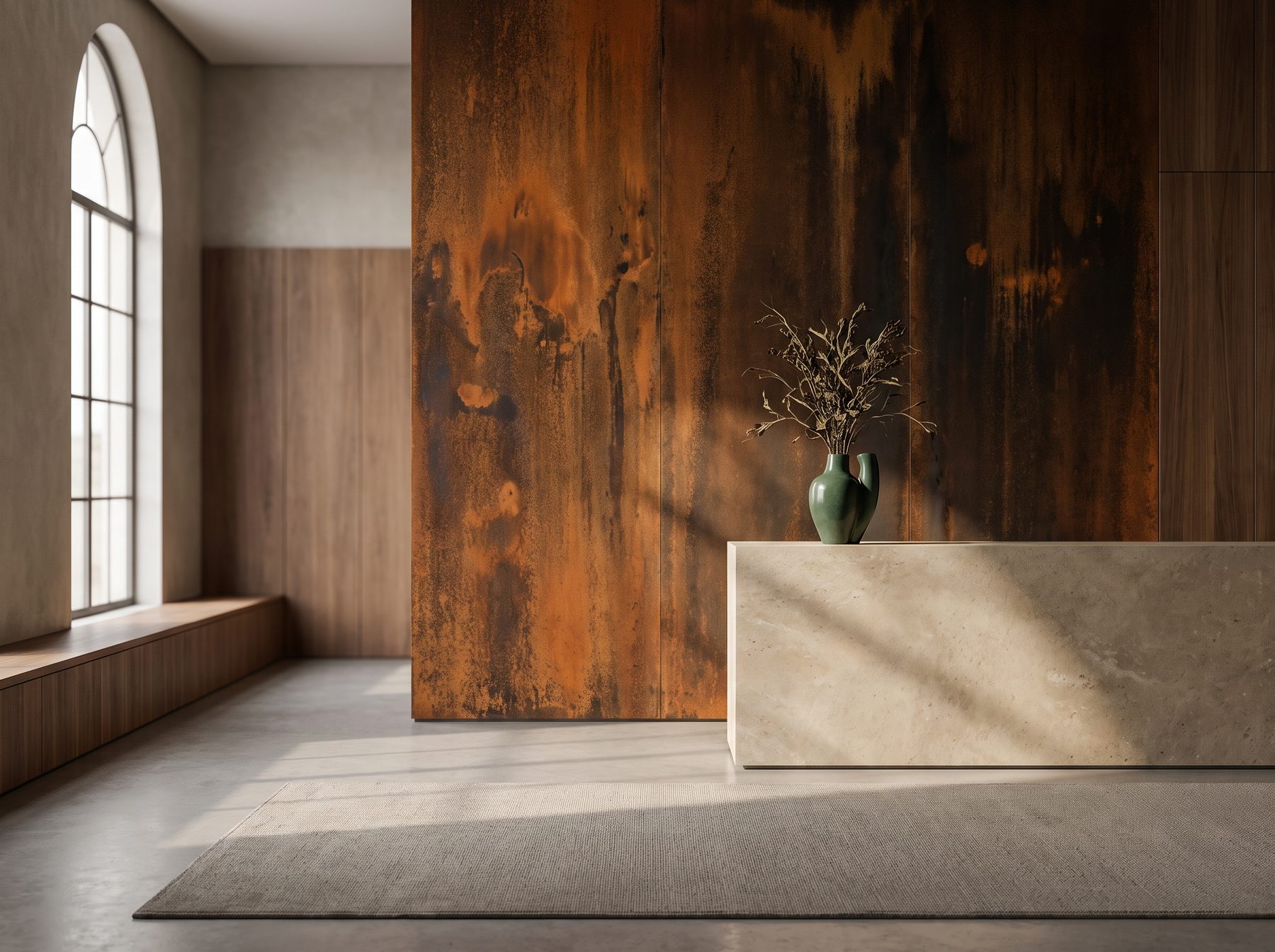
Oxidation effects are decorative finishes that don’t imitate rust or verdigris — they grow it. A coating carrying real metal particles — iron, copper, bronze or brass — is laid over the surface, and then a reactive, oxidising solution is worked into it. The chemistry does the rest: the iron blooms into genuine rust, the copper and bronze turn to soft green-and-blue verdigris, over hours instead of years. What you end up with is not a picture of age but the real thing, accelerated and then stopped exactly where you want it.
Because the colour is a chemical reaction rather than a pigment, no two panels are ever the same, and the tone carries a depth flat paint can’t reach — rust that is orange in one light and near-black in the shadow of a texture, verdigris that pools in the low points and thins over the ridges. Once the reaction reaches the character you’re after, it is neutralised and sealed so it holds, and stops spreading.
It’s worth separating this from our Liquid Metal finish, which can look related. Liquid Metal builds a true skin of metal powder and can be patinated — coaxed toward rust or verdigris as a tint worked across that burnished metal surface. Oxidation effects go further into the chemistry: the metal in the coating actually corrodes, so the rust and verdigris are the material itself oxidising, not a patina resting on a polished skin. One is metal made to look aged; the other is metal genuinely aging on the wall.
Where it comes from
Reactive metallic coatings are a modern decorative craft with a very old subject. They take a process nature runs slowly — the weathering of iron gates, the greening of copper roofs and bronze statues — and compress it into a controlled studio finish. Purpose-made systems, each pairing an iron or copper basecoat with a matching oxidising activator, turned that weathering into something an applicator can repeat and steer, rather than a happy accident found on an old door.
The appeal is honesty. Instead of a printed or hand-painted imitation of a weathered surface, you get the actual oxide, with all the irregularity only a real reaction can produce. We reach for it where a space wants the gravity of age and industry without waiting decades for it — a raw, handled, unmistakably real texture — and we always neutralise and seal the finished panel, so the beauty of the corrosion is captured at its best moment rather than left to keep spreading.
Start a project
Considering Oxidation Effects for your space?
Tell us about your project on WhatsApp and we'll take it from there.